Lunar 7th Month will start on 19th Aug 2020. Many will start preparing to do offering to the spirits while some will be doing merits for their parents.
This lunar 7th month due to Covid we will be doing light offerings for your parents instead of the usual Lotus offering to prevent mass gathering. During the month we will have our students coming to do prayers.
You may light a Full month candle or a half month candle for your parents or any elder in the family. And there is candles also available for departed love ones too.
Candle Offerings Energy Exchange:
1) Full Month @$250
2) Half Month @$150
For the candle you may wish to offer the above mentioned candle for your parents however if one of them had departed you will need to do a separate candle for each and if both departed 2 candles will be needed for this. You may msg me for more clarification.
Or you might want to do some merits for the wanderings spirits which we will be doing during this period. We welcome any amount for this cause. Please let me know before 16th Aug 2020.
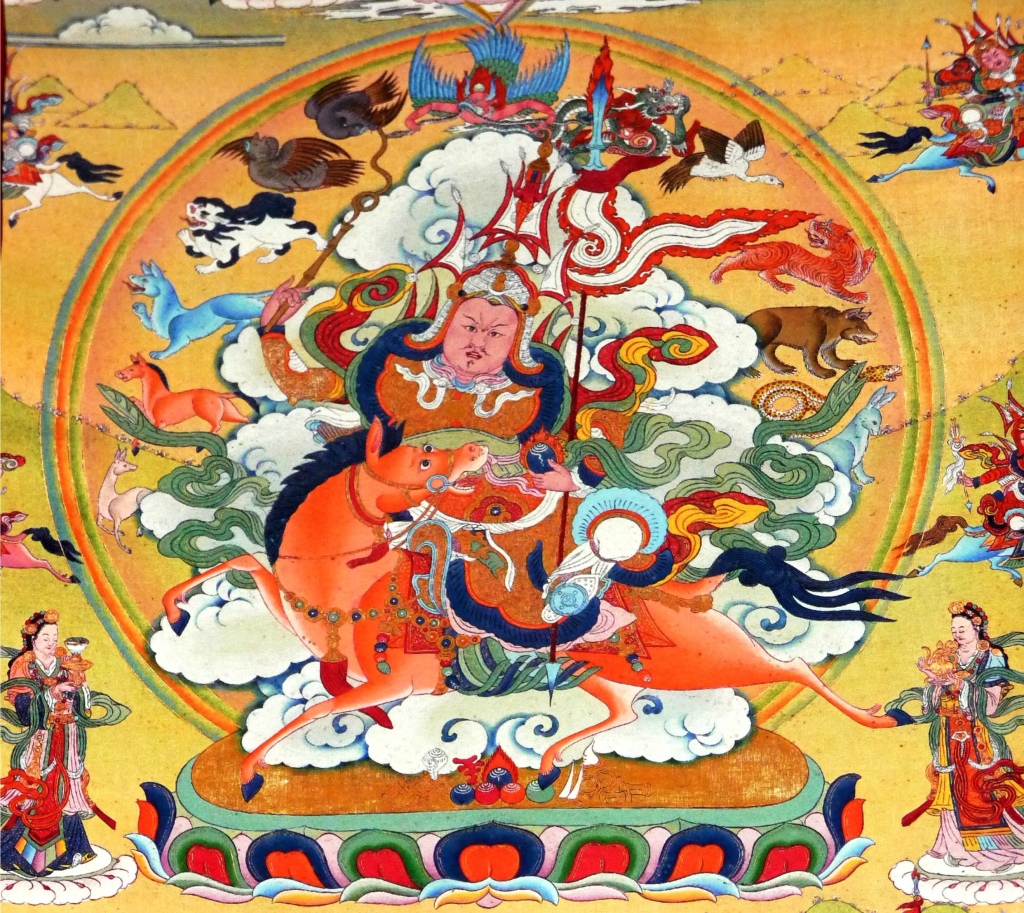
In Tibetan, Guru Padmasambhava is generally referred to as Guru Rinpoche, which means “precious master.” Guru Rinpoche is a totally enlightened being, a fully awakened one, a buddha. He did not become enlightened gradually, or start practicing the teachings of Buddha Shakyamuni and eventually achieve enlightenment. Guru Rinpoche incarnated as a fully enlightened being. Through his form, primordial wisdom manifests in the world to benefit all sentient beings.
Buddha Shakyamuni Foretells the Coming of Padmasambhava
Buddha Shakyamuni actually predicted Guru Padmasambhava’s appearance. Nineteen different sutras and tantras contain clear predictions of his arrival and activities. In the Mahaparinirvana Sutra, Buddha Shakyamuni announced his own mahaparinirvana to the students who were with him at the time. Many of them, particularly Ananda, the Buddha’s cousin and personal attendant, were quite upset upon hearing this, so the Buddha turned to Ananda and told him not to worry.
“Eight years after my mahaparinirvana, a remarkable being with the name Padmasambhava will appear in the center of a lotus and reveal the highest teaching concerning the ultimate state of the true nature, bringing great benefit to all sentient beings.” Buddha Shakyamuni said that Padmasambhava would be even more enlightened than himself. Of course, Buddha Shakyamuni was fully enlightened and there is no higher realization, but by the Buddha’s manner of expression, we can begin to understand the importance of Guru Padmasambhava. Some accounts hold that Guru Rinpoche is a direct reincarnation of Buddha Shakyamuni. Buddha Shakyamuni also said Padmasambhava would be an emanation of Buddha Amitabha and Avalokiteshvara, and referred to him as the “embodiment of all the buddhas of the three times.” Many prophecies indicate that Guru Rinpoche would be a fully enlightened buddha, appearing in this world to help sentient beings.
Revealing the “Secret Teachings” of the Vajrayana
For the most part, Buddha Shakyamuni presented “Hinayana” and Sutra Mahayana teachings, while Guru Padmasambhava taught the Vajrayana. Both revealed the complete and perfect path to awakening so that individuals of all capacities would benefit. The absolute level of the Buddha’s teaching is beyond conception. If it didn’t go beyond the conceptual level, there would be no need to change our normal way of understanding things. To help us realize the primordial nature, Buddha Shakyamuni repeatedly taught that we must transcend clinging to our ordinary dualistic conceptions, narrow attitudes, closemindedness, traditional rules, beliefs, and limitations.
The ultimate meaning of the highest teaching is not easily understood by sentient beings. This is why Buddha Shakyamuni remained silent for forty-nine days after his enlightenment. He thought, “I have realized the most profound and subtle Dharma, the clear light free of all complexity. However, this is much too deep for normal people to understand. Therefore, I will remain silent.” He knew how hard it would be to communicate the truth of his insight. Although he eventually taught tirelessly for forty-five years, his first thought reflected the extraordinary nature of the state into which he had awakened all of his relative, mundane ideas and conceptions.
Sutra is a Sanskrit word that means “condensed” or “summarized.” Scriptures bearing this title indicate that these teachings were directly communicated in this world in order to provide a clear understanding of the two truths—both the relative and absolute aspects of reality. The sutras provide instructions that a practitioner can apply to realize buddhahood.
Most of Buddha Shakyamuni’s teachings address ordinary beings and offer a direct way to understand the nature of our experience. They present a non-esoteric view that appeals to common logic, with tenets that can be verified by close observation of the elements that constitute our everyday world. With this knowledge, you can move toward enlightenment. This is the basic intention of Sutra Mahayana.
The Vajrayana is also known as Tantra. Tantric teachings are based on the Sutra Mahayana, but offer a more subtle understanding of our experience and additional methods to realize enlightenment. Vajrayana practice encourages us to take a deeper look at our perceptions, recognize our primordial nature, and maintain our mind in its natural state. In this way, the sutras are more general teachings that clarify the nature of conditioned mind and its perceptions, while the tantras reveal the secret, subtle structure of our body, mind, and all phenomena. Therefore, the Vajrayana teachings were given for more advanced practitioners. Although the sutras and tantras both share the same foundation, the Vajrayana goes further towards understanding transcendental reality as it is without being distorted by our habitual, conditioned mind. Practicing the sutras and tantras in union can bring enlightenment within this very life, even within a very short period of time. Accelerating our path to enlightenment is a principle distinction between the practices of the sutras and tantras.
The Buddha only gave Vajrayana teachings privately to select groups of disciples. Because the essence and even the form of these higher teachings are beyond common conception, they are known as “secret teachings.” After the Buddha entered mahaparinirvana, these secret teachings were preserved by many wisdom dakinis. When Guru Rinpoche appeared as the reincarnation of Buddha Shakyamuni, he revealed the Vajrayana teachings in their entirety; this is why Guru Rinpoche is known as the Buddha of the Vajrayana.
CINNABAR is said to be the common ore of mercury. It is known as a stone for manifestation and wealth creation. Business owners state how this stone increases wealth in one’s business.
Cinnabar helps one to become aware of their divine purpose
CINNABAR brings one to the source of their higher self to activate the process of integration between the higher and lower selves. Cinnabar ignites the awakening of psychic abilities, including mystic vision.
Cinnabar is aligned with the Celestial God Mercury
CHAKRA(s): Root, Sacral & Third-Eye
ENERGY:
Healing
Transformation
Manifestation
STIMULATES:
Psychic Transformation
Vigor
Self Confidence
Soul Integration
Divine Purpose
Mystic Vision
Manifestation
Creativity
Chakra Activation
Kundalini Energy
Vitality
Oneness
Mental Agility
Alchemy
METAPHYSICAL PROPERTIES:
Aids in community work
Helps one to remember that “to give is Divine”
Connects to the source of all being
Helps maintain the acquisition of wealth
Assists the spiritual alchemist, stimulating psychic transformation
Enhances the manifestation of spiritual energy
Forces one to be more vigorous, forceful and impelling in nature
Cleanses, Opens and Activates the Root and Sacral Chakras
Depends the connection to our core self
Heightens the imagination and creative thought/action
Helps one to bring their dreams into reality
Aligns all of our subtle bodies
Removes all energy blockages from ones energy field
CELESTITE comes from the Latin word “Heaven”. The energy of this stone vibrates at such a high level. It has become the New-Age teacher stone, as it provides one with hope and faith, while connecting one to the wisdom of the divine realms. Aids one in developing a sense of knowing who they are, physically and spiritually.
ENERGY:
Power
Love
Angelic Guidance
PROTECTION:
During Travel
Emotional Lore
Negativity
Negative Energy
STIMULATES:
Spiritual Development
Spiritual Elevation
Spiritual Awareness
Enlightenment
Purity of The Heart
Good Fortune
Channeling
Communication
METAPHYSICAL PROPERTIES:
It acts as a jump start for spiritual development
Guides one to enlightenment
Raises one’s awareness
Elevates one to a sense of floating
It cleans the Aura and envelops one in great peace and comfort
Purifies the environment everywhere it is placed and carried
Comforts the wearer with love and reassurance
Ultimate stone for everything that deals with spirituality
Illuminates the darkness for soul healing
Invokes one to move with the flow of life
Helps one tap into the vibrations of the Astral Plane
Enhances musical abilities
Helps connect one with the sacred energy
Promotes communication with beings of light
Opens one up to their own spiritual light
Removes any tension from life
Pushes one to get involved in constructive work
Helps keep energy levels up
Purifies thought patterns
Improves relations with family members
Heals the heart and soul by guiding one away from dark feelings
Keeps heart and soul in top-notch condition
Place in the middle of the room to spread spiritual awareness and spiritual uplift
Wear around the neck to improve social skills
Try to keep it safe and away from sun light, because it is a fragile stone
Vesak is one of the most important Buddhist festivals. It is also known as Wesak or Buddha Day.
It is a celebration of Buddha’s birthday and, for some Buddhists, marks his enlightenment (when he discovered life’s meaning).
It is also a time to reflect on his teachings and what it means to be Buddhist.
Buddhism, like most of the great religions of the world, is divided into a number of different traditions. However, most traditions share a common set of fundamental beliefs. One central belief of Buddhism is often referred to as reincarnation — the concept that people are reborn after dying. In fact, most individuals go through many cycles of birth, living, death and rebirth. A practicing Buddhist differentiates between the concepts of rebirth and reincarnation. In reincarnation, the individual may recur repeatedly. In rebirth, a person does not necessarily return to Earth as the same entity ever again. He compares it to a leaf growing on a tree. When the withering leaf falls off, a new leaf will eventually replace it. It is similar to the old leaf, but it is not identical to the original leaf. Buddhism is a philosophy of life expounded by Gautama Buddha (“Buddha” means “enlightened one”), who lived and taught in northern India in the 6th century B.C. The Buddha was not a god and the philosophy of Buddhism does not entail any theistic world view. The teachings of the Buddha are aimed solely at liberating sentient beings from suffering.
The Basic Teachings of Buddha which are core to Buddhism are: • The Three Universal Truths; • The Four Noble Truths; and • The Noble Eightfold Path.
THE THREE UNIVERSAL TRUTHS
Nothing is lost in the universe
2. Everything Changes
The Law of Cause and Effect
In Buddhism, the law of karma, says “for every event that occurs, there will follow another event whose existence was caused by the first, and this second event will be pleasant or unpleasant according as its cause was skillful or unskillful.” Therefore, the law of Karma teaches that the responsibility for unskillful actions is borne by the person who commits them.
After his enlightenment, the Buddha went to the Deer Park near the holy city of Benares and shared his new understanding with five holy men. They understood immediately and became his disciples. This marked the beginning of the Buddhist community. For the next forty-five years, the Buddha and his disciples went from place to place in India spreading the Dharma, his teachings. Their compassion knew no bounds; they helped everyone along the way, beggars, kings and slave girls. At night, they would sleep where they were; when hungry they would ask for a little food. Wherever the Buddha went, he won the hearts of the people because he dealt with their true feelings. He advised them not to accept his words on blind faith, but to decide for themselves whether his teachings are right or wrong, then follow them. He encouraged everyone to have compassion for each other and develop their own virtue: “You should do your own work, for I can teach only the way.”
Once, the Buddha and his disciple Ananda visited a monastery where a monk was suffering from a contagious disease. The poor man lay in a mess with no one looking after him. The Buddha himself washed the sick monk and placed him on a new bed. Afterwards, he admonished the other monks: “Monks, you have neither mother nor father to look after you. If you do not look after each other, who will look after you? Whoever serves the sick and suffering, serves me.” After many such cycles, if a person releases their attachment to desire and the self, they can attain Nirvana. This is a state of liberation and freedom from suffering.
The three trainings or practices These three consist of:
Sila: Virtue, good conduct, morality. This is based on two fundamental principles: The principle of equality: that all living entities are equal. The principle of reciprocity: This is the “Golden Rule” in Christianity – to do unto others as you would wish them to do unto you. It is found in all major religions.
Samadhi: Concentration, meditation, mental development. Developing one’s mind is the path to wisdom which, in turn, leads to personal freedom. Mental development also strengthens and controls our mind; this helps us maintain good conduct.
Prajna: Discernment, insight, wisdom, enlightenment. This is the real heart of Buddhism. Wisdom will emerge if your mind is pure and calm.
The first two paths listed in the Eightfold Path, described below, refer to discernment; the last three belong to concentration; the middle three are related to virtue.
THE FOUR NOBLE TRUTHS The Buddha’s Four Noble Truths explore human suffering. They may be described (somewhat simplistically) as:
Dukkha: Suffering exists: Life is suffering. Suffering is real and almost universal. Suffering has many causes: loss, sickness, pain, failure, and the impermanence of pleasure.
Samudaya: There is a cause of suffering. Suffering is due to attachment. It is the desire to have and control things. It can take many forms: craving of sensual pleasures; the desire for fame; the desire to avoid unpleasant sensations, like fear, anger or jealousy.
Nirodha: There is an end to suffering. Attachment can be overcome. Suffering ceases with the final liberation of Nirvana (Nibbana). The mind experiences complete freedom, liberation and non-attachment. It lets go of any desire or craving.
Magga: In order to end suffering, you must follow the Eightfold Path. There is a path for accomplishing this.
The five precepts These are rules to live by. They are somewhat analogous to the second half of the Ten Commandments in Judaism and Christianity — that part of the Decalogue which describes behaviors to avoid. However, they are recommendations, not commandments. Believers are expected to use their own intelligence in deciding exactly how to apply these rules:
Do not kill. This is sometimes translated as no harming or an absence of violence.
Do not steal. This is generally interpreted as including the avoidance of fraud and economic exploitation.
Do not lie. This is sometimes interpreted as including name calling, gossip etc.
Do not misuse sex. For monks and nuns, this means any departure from complete celibacy. For the laity, adultery is forbidden, along with any sexual harassment or exploitation, including that within marriage. The Buddha did not discuss consensual premarital sex within a committed relationship, thus, Buddhist traditions differ on this. Most Buddhists, probably influenced by their local cultures, condemn same-sex sexual activity regardless of the nature of the relationship between the people involved.
Do not consume alcohol or other drugs. The main concern here is that intoxicants cloud the mind. Some have included as a drug other methods of divorcing ourselves from reality — e.g. movies, television, and the Internet.
THE EIGHTFOLD PATH
The Buddha’s Eightfold Path consists of: Panna: Discernment, wisdom:
Samma ditthi: Right Understanding of the Four Noble Truths. Right View is the true understanding of the four noble truths.
Samma sankappa: Right thinking; following the right path in life. Right Aspiration is the true desire to free oneself from attachment, ignorance, and hatefulness. These two are referred to as Prajna, or Wisdom. Sila: Virtue, morality:
Samma vaca: Right speech: No lying, criticism, condemning, gossip, harsh language. Right Speech involves abstaining from lying, gossiping, or hurtful talk.
Samma kammanta Right conduct or Right Action involves abstaining from hurtful behaviors, such as killing, stealing, and careless sex. These are called the Five Precepts.
Samma ajiva: Right livelihood: Support yourself without harming others. Right Livelihood means making your living in such a way as to avoid dishonesty and hurting others, including animals. These three are referred to as Shila, or Morality. Samadhi: Concentration, meditation:
Samma vayama: Right Effort: Promote good thoughts; conquer evil thoughts. Right Effort is a matter of exerting oneself in regards to the content of one’s mind: Bad qualities should be abandoned and prevented from arising again. Good qualities should be enacted and nurtured.
Samma sati: Right Mindfulness: Become aware of your body, mind and feelings. Right Mindfulness is the focusing of one’s attention on one’s body, feelings, thoughts, and consciousness in such a way as to overcome craving, hatred, and ignorance.
Samma samadhi: Right Concentration: Meditate to achieve a higher state of consciousness. Right Concentration is meditating in such a way as to progressively realize a true understanding of imperfection, impermanence, and non-separateness






 神帥居(慈玄)